If you’ve ever winced at the $1,495 price tag on a Herman Miller Aeron — the gold-standard ergonomic task chair that essentially defines what “proper desk chair” means to the industry — but also quietly suspected that the $129 mesh chair from a big-box store might be contributing to your afternoon back pain, you’ve already located the $400–$550 tier on the map. This price band is the serious middle ground: chairs that use real engineering vocabulary (adjustable lumbar support, synchro-tilt mechanisms, seat-depth sliders) and aren’t just marketing those features as decorations. The question worth answering before you spend five hundred dollars is: how much of what’s promised actually shows up in the chair? This article breaks down what the specs mean, which claims are genuinely differentiated at this price, and which ones are borrowed language that masks a cheaper execution underneath.
| EDITOR'S PICK[Branch Ergonomic Chair Pro](https://www.amazon.com/dp/B0C15C11D9?tag=greenflower20-20) - Me… | Mid-tier[FelixKing Office Chair](https://www.amazon.com/dp/B0BG1H99FB?tag=greenflower20-20) - Ergono… | Budget pick[HON Ignition 2.0 Mid‑Back Ergon…](https://www.amazon.com/dp/B0CZBG2X2N?tag=greenflower20-20) | |
|---|---|---|---|
| Adjustable Arms | 5D | Flip-up | Height/Width |
| Seat Depth | Adjustable | — | — |
| Forward Tilt | ✓ | — | — |
| Synchro-Tilt | — | — | ✓ |
| Price | $449.10 | $439.99 | $381.50 |
| See on Amazon → | See on Amazon → | See on Amazon → |
What “Ergonomic” Actually Costs to Build
A chair earns the label “ergonomic” — which simply means designed to fit the human body during sustained work — through a specific set of mechanisms. The ones that matter at a desk are: lumbar support that adjusts in height and depth (not just a fixed bump in the backrest), a seat pan that slides forward and back to fit different leg lengths (seat-depth adjustment), armrests that move in at least three directions (height, width, and pivot), and a recline mechanism that doesn’t dump your weight backward when you lean.
Every one of those components costs money to engineer well. Wirecutter’s 2025 review of office chairs (“The Best Office Chair”) notes that the gap between budget mesh chairs and genuinely adjustable ones is largely a mechanical story — cheaper chairs simulate adjustability with levers that technically move but have almost no functional range. Below roughly $250, manufacturers typically cut corners on lumbar adjustment range, armrest lateral movement, and seat-depth travel. Between $250 and $400, you get real adjustability in most categories, but plastic quality and foam density start to show age faster. The $400–$550 window is where, across aggregated owner reports, chairs more consistently hold their adjustment settings at the three-year mark.
That last detail matters more than it sounds. A chair whose lumbar support sags to the bottom of its track after 18 months of daily use is functionally an unadjustable chair for most of its life.
The Three Mechanisms That Define This Tier
The features below form the backbone of any serious evaluation at this price. Each one maps to a chair category in the comparison section that follows.
Lumbar Support: Adjustable vs. “Adaptive”
Marketing at this price loves the word “adaptive” for lumbar support — which often means a flexible mesh panel that bends with your back rather than a discrete mechanism you dial to your specific lumbar curve. Ergonomic Trends’ 2024 breakdown of lumbar support types (“Lumbar Support Mechanisms Explained”) is clear on this point: flexible mesh adaptation and independent lumbar adjustment are not the same thing. Flexible mesh is better than a rigid plastic shell, but it optimizes for the average spine, not yours. True height-adjustable lumbar — a separate pad or curved support you physically relocate on the backrest — lets someone with a 32-inch torso and someone with a 26-inch torso both place the support point correctly.
At $400–$550, most chairs in the serious contender set offer at least height-adjustable lumbar. What separates the top of this tier from the bottom is depth adjustment — the ability to push that lumbar support toward your lower back rather than just raising or lowering it. That second axis is where chairs with genuine lumbar depth control separate from the crowded midfield, and it is the spec most owner reviews flag as the feature they actually use to fine-tune fit after the first week.
Seat Depth: The Most Overlooked Spec
Consumer Reports’ 2025 office chair buying guide (“Office Chair Buying Guide”) specifically calls out seat-depth adjustment as the most commonly skipped evaluation step when buyers try chairs in showrooms. Seat depth — the front-to-back dimension of the seat pan — determines whether the edge of your chair cuts into the back of your knees. If you are between 5’4” and 5’10”, a fixed seat pan is probably adequate. Outside that range, or if you share the chair with someone of a different height, a sliding seat is not optional.
At this price tier, most chairs include it. But the range of travel matters. A slider with 1.5 inches of travel is marginal; 2.5 to 3 inches is genuinely useful. Published specs on this are inconsistent — not every manufacturer lists travel distance in millimeters — so owner reports are often the better signal. Taller users (6’1” and above) consistently report that seat-depth range is the first thing that stops working for them on chairs at the lower end of this tier.
Armrest Quality: 4D vs. the 3D Gap
Armrests are measured in “D” dimensions: height only is 1D, height plus width is 2D, adding forward/back is 3D, adding pivot (rotating the pad inward to match keyboard angle) is 4D. At $400–$550, 4D armrests are available but not universal. CNET’s 2025 chair roundup (“Best Office Chairs for 2025”) notes that pivot armrests are specifically valuable for anyone who types with their wrists angled inward, which describes most touch typists. Without pivot, you end up positioning the armrests for typing or for mousing — but not both.
Comparison: Three Profiles at This Price Tier
Understanding this tier means understanding that $400–$550 is not a monolith. Three distinct buyer profiles map to three distinct positions on the feature-versus-cost curve.
The Entry Point: Genuine Adjustability, Tighter Tolerances
Chairs at the $400–$430 end of this range deliver the headline ergonomic checklist — height-adjustable lumbar, seat-depth slider, 3D armrests — but typically in a package where the lumbar depth axis is absent or minimal, the armrest travel ranges are narrower, and the warranty sits at 2–3 years. Forbes’ 2025 ergonomic chair roundup (“Best Ergonomic Office Chairs”) explicitly flags warranty length as a proxy for manufacturer confidence in build quality, noting that brands offering shorter warranties at this tier are the ones more likely to show mechanism softening in long-run owner reports.
For users moving up from a sub-$200 chair, this profile still represents a meaningful upgrade. Consumer Reports’ buying guide is direct on one important caveat: no chair resolves disc issues or replaces movement breaks. A chair in this range supports healthy sitting mechanics; it doesn’t replace a physical therapist.
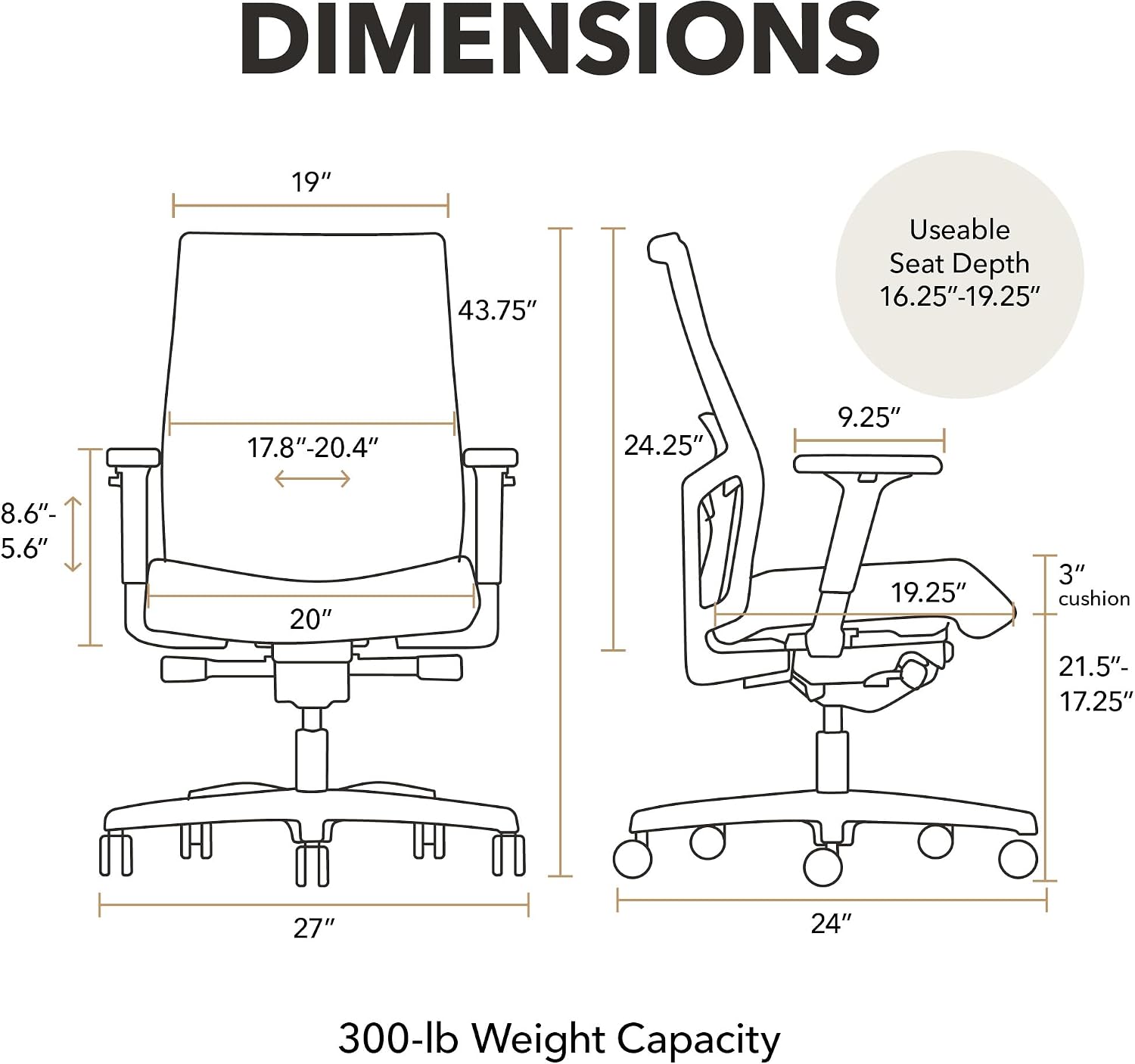
HON
$381.50
In stock on Amazon
Check price on AmazonThe Sweet Spot: Lumbar Depth + 4D Arms + 3-to-5-Year Warranty
The densest cluster of well-reviewed chairs sits between $450 and $510. This is where lumbar depth adjustment becomes available as a standard rather than an upgrade, 4D pivot armrests appear consistently, and warranty terms stretch to 3–5 years. Wirecutter’s 2025 office chair review (“The Best Office Chair”) notes that brands offering 5-year-plus warranties at mid-tier pricing are the ones whose chairs appear in long-run owner reports without significant mechanism failure — which makes warranty term a meaningful filter, not just a marketing number.
The Steelcase Series 1 sits near the top of this band at around $540 street price and carries BIFMA certification — BIFMA stands for Business and Institutional Furniture Manufacturers Association, the industry’s independent safety and durability testing body. BIFMA certification at this price is a meaningful differentiator because it means the chair passed standardized third-party load and cycle testing rather than relying on a manufacturer-declared rating alone.
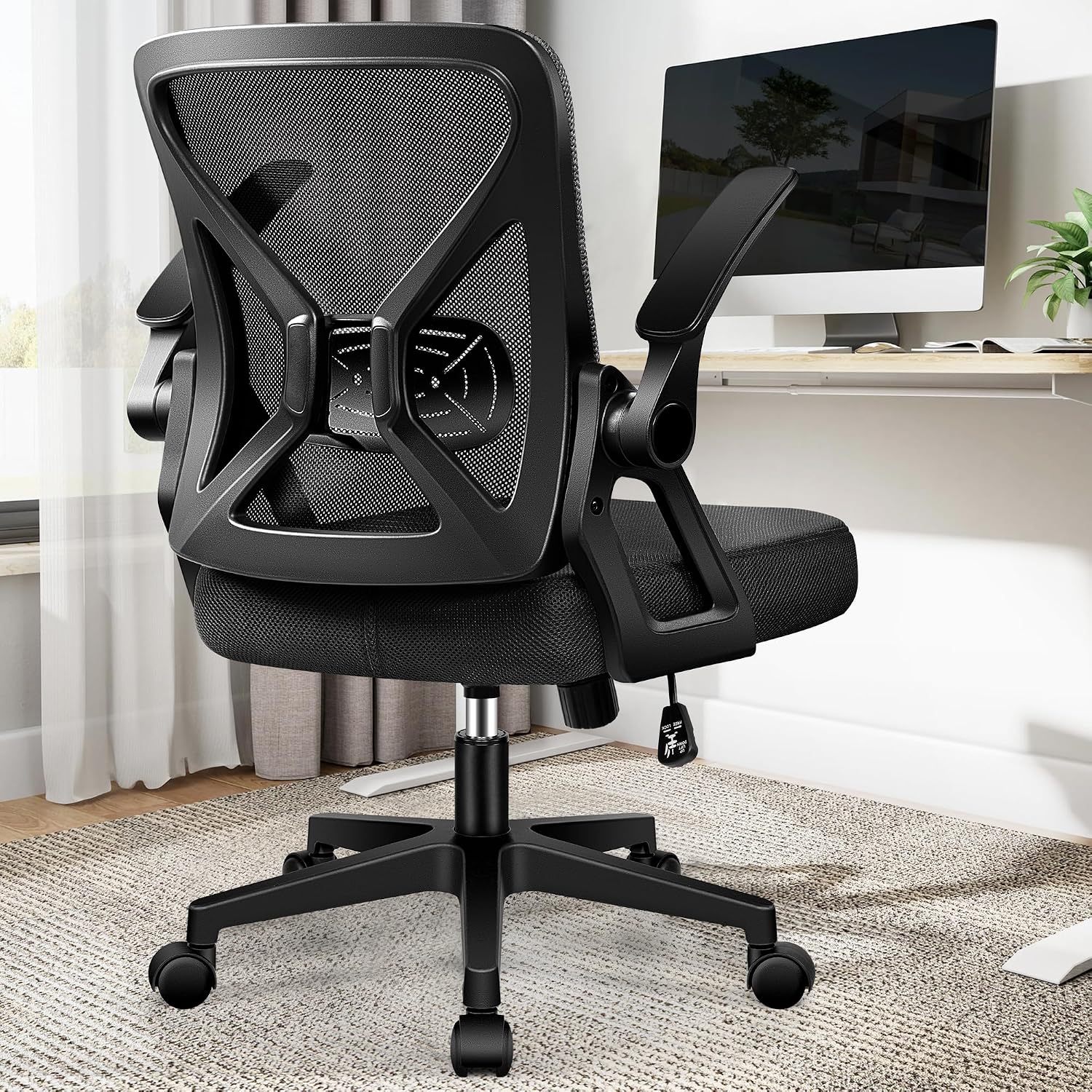
FelixKing
$439.99
In stock on Amazon
Check price on AmazonThe Upper Ceiling: Approaching Flagship Build at Non-Flagship Price
At $530–$550, you reach chairs where the materials quality, tilt mechanism refinement, and adjustment resolution begin to narrow the gap to the Herman Miller and Steelcase flagship tier — but do not close it. The Aeron’s PostureFit SL system supports both the sacrum and the lumbar curve independently, a dual-zone approach that no chair at this tier replicates. The Aeron also carries a 12-year warranty, compared to the 5-year maximum available at this price.
Forbes’ 2025 roundup puts this trade-off plainly: if your expected tenure in a chair is five-plus years at a primary workstation, the Aeron math starts working. Under two years, or in a secondary workspace, the $400–$550 ceiling is genuinely defensible. The upper end of this tier is best understood as a serious intermediate option — not a permanent substitute for the flagship tier, but a reasonable place to spend two to three years before deciding whether the upgrade is warranted.
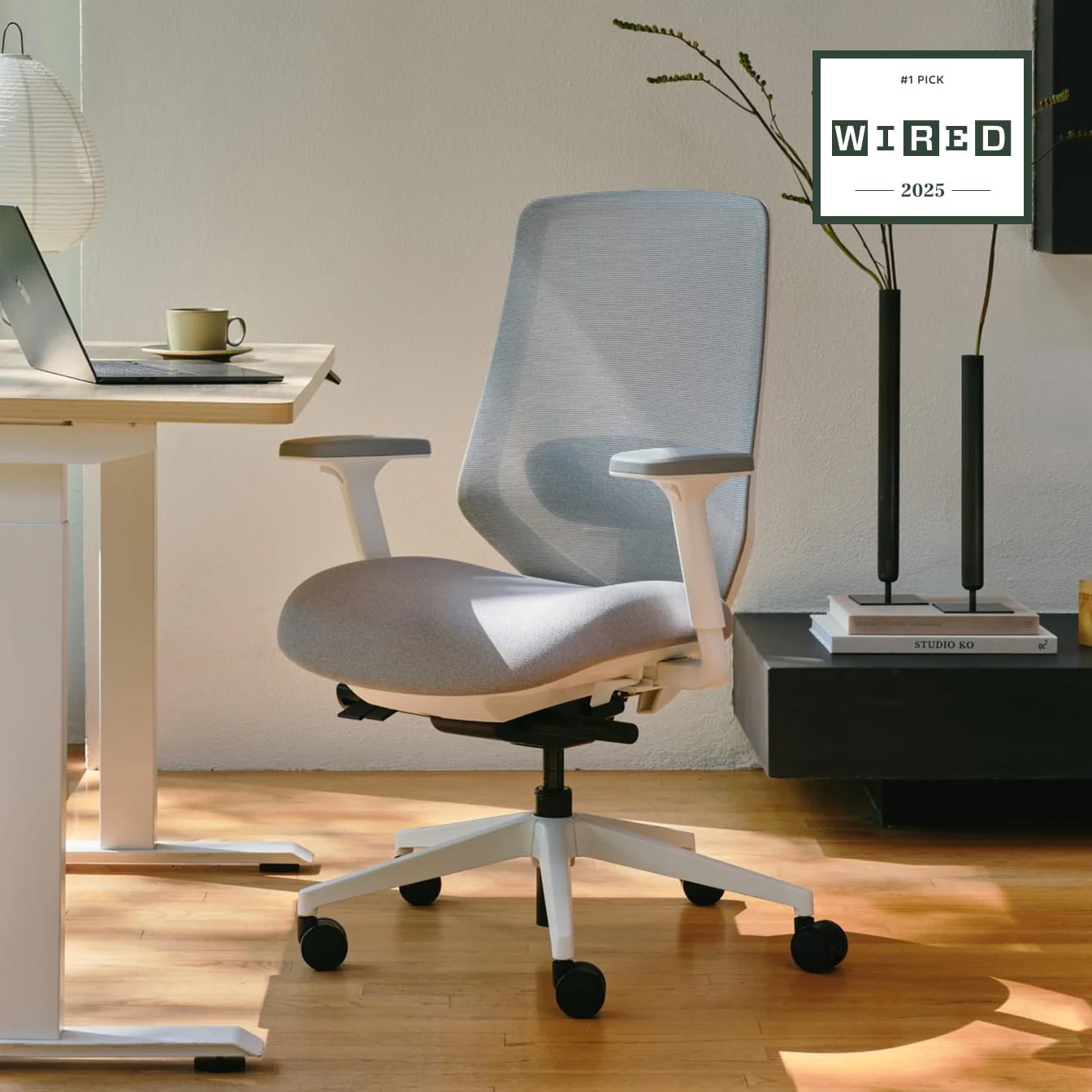
Branch
$449.10
In stock on Amazon
Check price on AmazonWhat the Marketing Exaggerates at This Price
”Mesh Breathability” Claims
Every chair in this tier uses mesh for the backrest and often the seat. The marketing language escalates quickly: “advanced airflow technology,” “patented ventilation zones,” “temperature-regulating mesh.” The reality, per owner reports across multiple review aggregators, is that mesh at this price is meaningfully cooler than upholstered foam — full stop. The inter-brand breathability differences within this tier are minimal and largely undetectable in daily use. If you are comparing two chairs and one markets breathability harder than the other, that is not a signal to weight heavily.
Weight Capacity as a Durability Proxy
Weight ratings of 250 lbs, 300 lbs, and 350 lbs appear across chairs in this tier. The instinct to read a higher weight rating as stronger construction makes intuitive sense, but as Ergonomic Trends notes in its lumbar support analysis, weight ratings at this tier are manufacturer-declared figures without standardized third-party testing methodology. The more reliable durability signal is warranty length combined with whether the manufacturer has a documented, responsive claim process — which Wirecutter’s 2025 guide calls out explicitly when distinguishing brands that handle warranty replacements well from those that don’t.
”Lumbar Curve Matches Spine Anatomy” Copy
A chair’s backrest has a curve built into it — the S-shape that follows a typical lumbar-thoracic profile. Marketing at this tier frequently presents this as a proprietary fit innovation. It is not. Every backrest has this curve. The meaningful differentiation is whether that curve’s inflection point can be moved to match your specific torso length and lumbar position — which is the adjustment mechanism discussion above. “Designed to match your spine” without adjustability is a fixed curve with better copywriting.
The Real Decision Frame at $400–$550
Here is the honest tradeoff map for this tier, framed as decision rules:
If you are buying for a single user who will use this chair 6+ hours daily: The warranty term and the lumbar depth adjustment are your primary filters. Chairs with BIFMA certification and a 5-year warranty at this price represent the strongest value proposition in the tier.
If you are outfitting a home office and the chair will be shared by two people with meaningfully different heights: Seat-depth travel and armrest width adjustment become your primary specs. Verify the millimeter travel figures before buying, not after.
If you are coming from a sub-$200 chair and experiencing recurring lower-back fatigue: The jump to this tier is almost certainly worth it, but set realistic expectations. Consumer Reports’ buying guide is direct: ergonomic chairs address posture support, not pre-existing conditions. No chair substitutes for a movement practice or clinical care.
If you are seriously weighing a Herman Miller or Steelcase flagship: The $400–$550 tier is a reasonable intermediate test, not a permanent substitute. The engineering distance is real — dual-zone sacral-plus-lumbar support, a 12-year warranty, and materials-grade resilience are not replicated here. The question is tenure: five-plus years at a primary workstation is where the flagship math starts working.
The Bottom Line
The $400–$550 ergonomic chair tier is real — not a marketing fiction. You get genuine mechanical adjustability, meaningful warranty protection, and build quality that owner reports consistently describe as stable past the three-year mark. What you do not get is the dual-zone lumbar engineering, the 12-year warranty, or the materials resilience of the Herman Miller and Steelcase flagship tier. That gap is real and worth knowing before you spend.
The single most reliable filter in this tier: find the lumbar depth adjustment specification and the warranty term before you read any marketing copy. Those two numbers cut through more noise than anything else on the spec sheet.