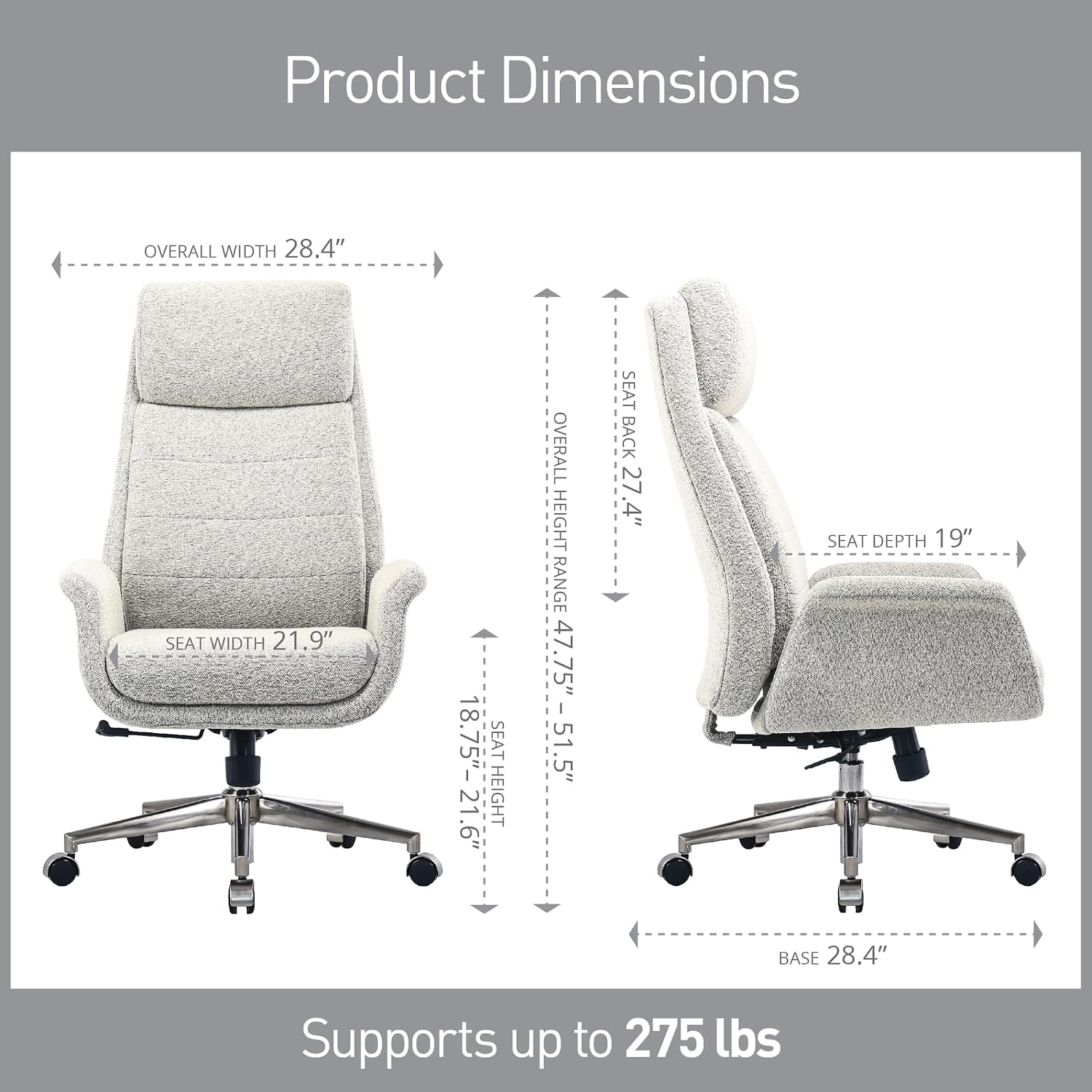
If you’ve ever bought what was labeled a “leather executive chair” only to watch it start flaking and peeling within two years, you already understand the central problem with how this category is marketed. The word “leather” on a product listing can mean at least three genuinely different things — bonded leather (a manufactured composite that looks like leather but behaves very differently), faux leather (a fully synthetic material, sometimes called PU or vegan leather), and genuine leather (actual animal hide, which itself spans a wide quality range from corrected-grain to full-grain). Each material has a different lifespan, a different maintenance burden, and a very different price ceiling. If you’re reading this with a purchase decision pending — whether you’re specifying a single executive chair for a home office or sourcing contract seating for a suite of private offices — this guide is built to give you a clear framework before you commit.
The stakes are real. A well-specified genuine leather executive chair from a reputable manufacturer is a 10–15 year asset. A bonded leather chair at a similar price point — and they often share shelf space — can start visibly degrading in 18 months. That gap isn’t marketing noise. It’s the core decision this article is designed to help you navigate.
| EDITOR'S PICK[Serta Bryce Executive Office Ch](https://www.amazon.com/dp/B0DJ8ZT7CN?tag=greenflower20-20)… | Mid-tier[Realspace® Hurston Bonded Leath](https://www.amazon.com/dp/B079H1JH2L?tag=greenflower20-20)… | Budget pick[COLAMY High Back Executive Offi](https://www.amazon.com/dp/B0BD7Z94ZQ?tag=greenflower20-20)… | |
|---|---|---|---|
| Leather type | Bonded Leather | Bonded Leather | Padded Leather |
| Lumbar support | Lumbar Technology | — | Inflatable Lumbar |
| Armrest type | — | — | Flip-Up |
| Seat cushion | Memory Foam | — | — |
| BIFMA rated | — | ✓ | — |
| Price | $187.49 | $185.84 | $128.83 |
| See on Amazon → | See on Amazon → | See on Amazon → |
What Each Material Actually Is (And Why the Labels Mislead You)
Let’s start with the material science, in plain language.
Bonded leather is the category’s most problematic term. It’s not leather in any meaningful durability sense. Manufacturers take leather scraps and fiber dust — byproducts of genuine leather production — grind them together, bind them with polyurethane adhesive, and press the result onto a fabric or paper backing. The surface is then embossed to look like hide grain. Bonded leather typically contains a small fraction of actual leather fiber by weight; the remainder is adhesive and synthetic backing. The practical consequence: as the adhesive breaks down under heat, body oils, and UV exposure, the surface layer begins to separate from the backing. That’s the peeling you’ve seen. It’s not a quality-control failure — it’s the material doing what the material does.
Faux leather (also called PU leather, vegan leather, or leatherette) is entirely synthetic — typically a polyurethane or PVC coating over a fabric base. It contains no animal-derived material. The honest upside: faux leather’s failure mode is gradual surface cracking or fading rather than sudden delamination. A quality PU construction can last 5–8 years with reasonable care. Architectural Digest, in its tested-and-reviewed coverage of office chairs, notes that higher-end faux leathers — particularly microfiber-backed PU constructions — have meaningfully closed the durability gap with entry-level genuine leather in recent years. The honest downside: no faux leather breathes the way hide does, and in humid climates or for users who run warm, the seated experience over multi-hour sessions is noticeably different.
Genuine leather is hide — cow, buffalo, or occasionally other animals — that has been tanned, finished, and cut. But “genuine leather” is itself a spectrum. From bottom to top:
- Corrected-grain: The lowest tier of real leather. The hide surface is sanded to remove imperfections, then embossed with an artificial grain. It’s real leather, but the structural integrity is compromised by the surface correction. Expect 5–8 years with care.
- Top-grain leather: Sanded lightly, then finished. Retains more of the hide’s structural fiber. This is the workhorse of the premium executive chair market. With conditioning, owners report 10+ year lifespans.
- Full-grain leather: The hide surface is left intact, showing natural markings. It’s the strongest cut, develops a patina over time, and is used in the highest-tier seating products. It’s also the most maintenance-honest: it needs conditioning, and it will show wear, but that wear becomes character rather than failure.
Consumer Reports, in its leather furniture buying methodology, makes a point that applies directly here: the grade of leather matters more than the brand name on the tag, and most mid-market listings omit the grade entirely, forcing you to ask explicitly or assume the worst.
The Durability Math: By the Numbers
Here’s a compressed look at realistic lifespans and price ranges as of mid-2026 market conditions. Each row reflects a distinct tier in the market — budget, mid-range, and premium — along with the two genuine-leather sub-tiers that anchor the upper end.
| Material | Realistic Lifespan | Typical Chair Price Range | Failure Mode |
|---|---|---|---|
| Bonded leather | 1.5–3 years | $150–$600 | Peeling, delamination <a class="product-link" href="https://www.amazon.com/dp/B0BD7Z94ZQ?tag=greenflower20-20" rel="sponsored nofollow noopener" target="_blank" title="Affiliate link — we may earn a commission.">COLAMY — $128.83</a> |
| Faux / PU leather | 4–8 years | $200–$900 | Surface cracking, fading <a class="product-link" href="https://www.amazon.com/dp/B0BD7Z94ZQ?tag=greenflower20-20" rel="sponsored nofollow noopener" target="_blank" title="Affiliate link — we may earn a commission.">COLAMY — $128.83</a> |
| Corrected-grain genuine | 5–8 years | $400–$1,200 | Drying, cracking without care <a class="product-link" href="https://www.amazon.com/dp/B0845YD6DX?tag=greenflower20-20" rel="sponsored nofollow noopener" target="_blank" title="Affiliate link — we may earn a commission.">Realspace® — $185.84</a> |
| Top-grain genuine | 8–15 years | $800–$3,000+ | Patina development, minimal failure <a class="product-link" href="https://www.amazon.com/dp/B0845YD6DX?tag=greenflower20-20" rel="sponsored nofollow noopener" target="_blank" title="Affiliate link — we may earn a commission.">Realspace® — $185.84</a> |
| Full-grain genuine | 12–20+ years | $1,500–$6,000+ | Patina, character aging <a class="product-link" href="https://www.amazon.com/dp/B07645VL18?tag=greenflower20-20" rel="sponsored nofollow noopener" target="_blank" title="Affiliate link — we may earn a commission.">Serta — $187.49</a> |
The cost-per-year math is instructive. A $400 bonded leather chair replaced every 2 years runs $200/year. A $1,600 top-grain genuine chair lasting 12 years runs $133/year — and that’s before accounting for the resale value that genuine leather chairs retain and bonded leather chairs do not.
Where Each Material Makes Sense: Budget, Mid-Tier, and Premium
The honest answer is that material choice should follow use case, not just budget aspiration. Here’s how the decision maps across the three main spending tiers.
Budget Tier: Under $500
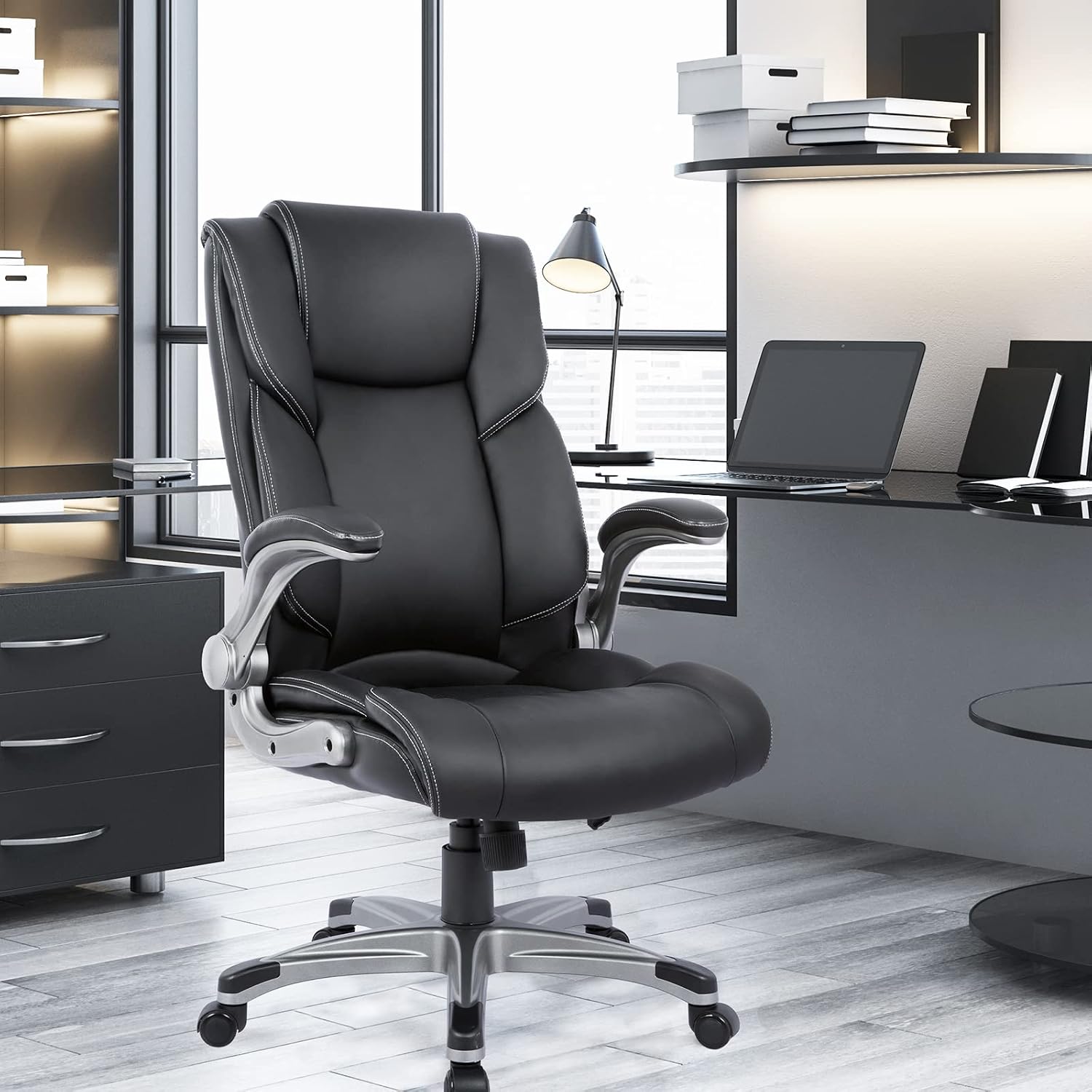
COLAMY
$128.83
In stock on Amazon
Check price on AmazonBonded leather is almost never the right choice for a primary executive chair at any price, but the budget tier is where it causes the most harm. The failure timeline is too predictable and too frustrating. The one narrow exception: high-traffic guest seating or staging environments where appearance matters more than longevity and replacement is already budgeted. Even then, faux leather is a more defensible choice for the same money — the failure mode is slower and less dramatic.
Faux leather earns its place at the budget tier. Buyers with genuine ethical objections to animal products can now access quality PU constructions that won’t embarrass a home office setup. Ergonomic Trends, in its 2025 executive chair buying guide, specifically flags that PU leathers with UV-stabilized topcoats — now standard in the $600+ faux leather tier — outperform genuine leather in direct-sun environments without window treatment. For buyers with south-facing windows and no UV film, this is a meaningful practical distinction.
At this tier, look for: PU with a microfiber backing, an explicit UV-stabilized topcoat callout, and a fabric base rather than a paper backing (the latter is a cost-cut associated with faster cracking). Avoid anything labeled only “leather look” or “leather touch” without further material disclosure.
COLAMY
$128.83
In stock on Amazon
Check price on AmazonMid-Tier: $500–$1,500
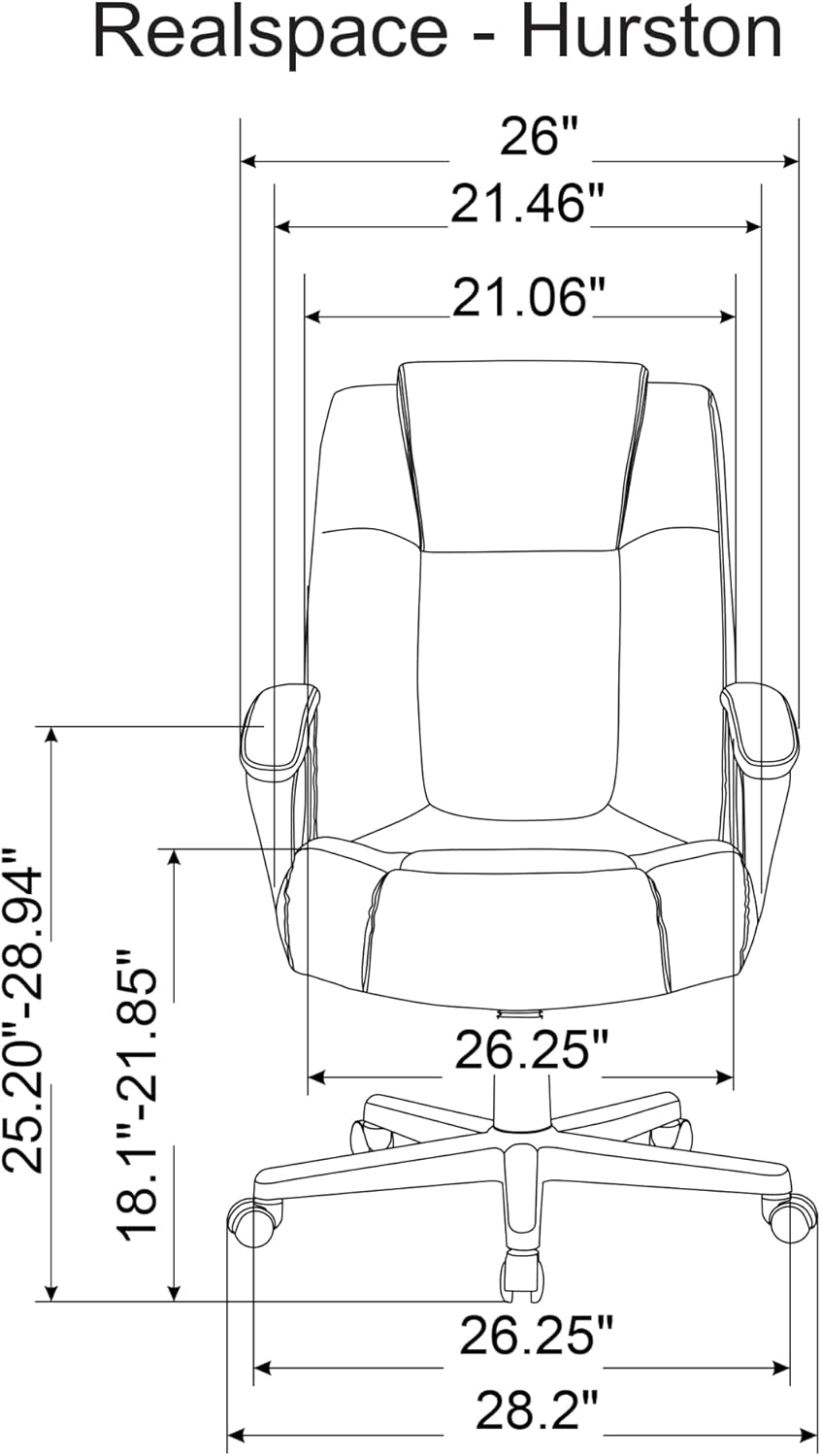
Realspace®
$185.84
In stock on Amazon
Check price on AmazonThis is the range where the material decision becomes most consequential — and where the gap between corrected-grain and top-grain genuine leather is large enough to matter, even though both share a price band.
Corrected-grain genuine leather at the lower end of this range (roughly $400–$900) is real leather, but the surface sanding that removes hide imperfections also removes structural fiber. Conditioning extends its life meaningfully, but don’t expect the same longevity as top-grain. Good Housekeeping’s leather furniture care guidance recommends a quality conditioner applied every 6–12 months depending on climate — at the corrected-grain tier, adherence to that schedule is the difference between a 5-year chair and an 8-year chair.
Top-grain genuine leather is the workhorse of the $800–$1,500 executive chair market. Wirecutter’s office chair coverage has consistently identified top-grain hide as the threshold above which buyers can realistically expect a 10-year asset rather than a 5-year consumable. Push hard for this grade if your budget allows any flexibility at this tier — the price gap between a well-specified faux leather chair and entry-level top-grain narrows significantly, and the long-term outcome diverges substantially.
The key diagnostic at the mid-tier: check the warranty language on upholstery specifically. Many executive chairs carry 5-year or lifetime warranties on the frame and mechanism — but only 1-year warranties on upholstery. Forbes, in its 2025 best leather office chairs coverage, flags this as one of the most commonly overlooked spec discrepancies in the category. A 1-year upholstery warranty on a “leather” chair is a reliable signal that the manufacturer expects the surface material to fail early.
Realspace®
$185.84
In stock on Amazon
Check price on AmazonPremium Tier: $1,500 and Above
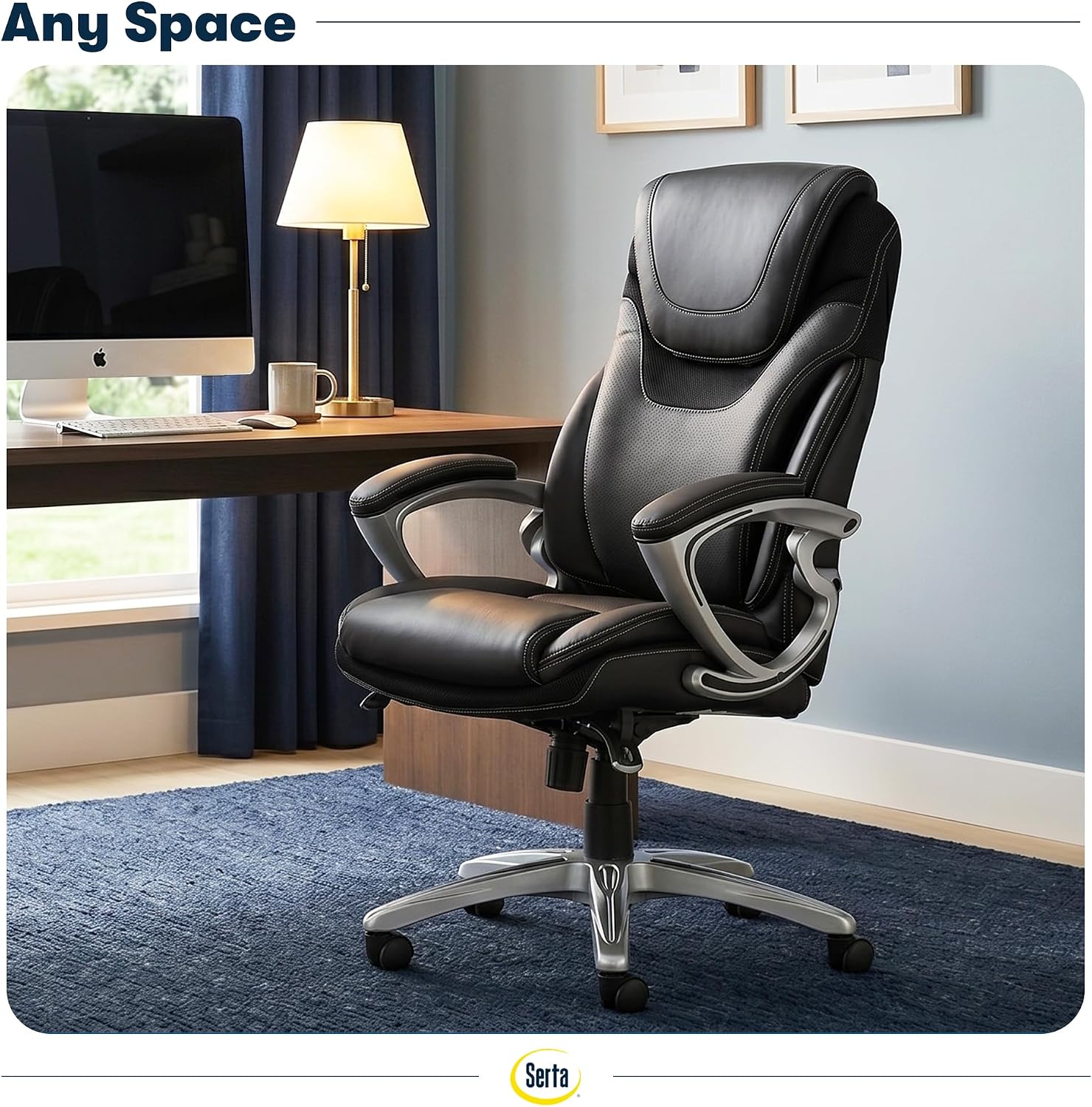
Serta
$187.49
In stock on Amazon
Check price on AmazonFull-grain genuine leather is the appropriate specification at this tier, and the editorial recommendation for buyers treating an executive chair as a long-term anchor piece. The hide surface is left intact, retaining its full structural depth and developing a patina over time. Manufacturers confident in full-grain construction will back upholstery for at least 3–5 years — treat anything less as a red flag at this price point.
The tradeoff is maintenance honesty: full-grain will show every scratch and spill before it conditions back. If you’re not prepared to condition twice a year and address spills promptly, top-grain is the more forgiving choice at the upper mid-tier. Full-grain rewards attentive owners and penalizes neglectful ones more visibly than any other hide grade.
At this tier, also ask about the tanning process. Chrome-tanned leather (the industry standard) is softer and more uniform. Vegetable-tanned leather is stiffer initially but develops superior patina over decades. Both are legitimate; vegetable-tanned is more commonly found in bespoke and artisan-adjacent seating than in volume executive production. Either is an appropriate answer — an inability to answer the question at all is not.
Serta
$187.49
In stock on Amazon
Check price on AmazonWhat to Ask Before You Buy (Especially If the Listing Is Vague)
Most mid-market and even some premium listings are deliberately ambiguous about leather grade. Here’s the practitioner’s checklist for any chair where the material description is unclear:
1. Ask for the hide grade in writing. “Genuine leather” tells you nothing. “Top-grain bovine hide, chrome-tanned” tells you something. If a retailer can’t produce this on request, treat the material as corrected-grain or lower.
2. Check the warranty language for upholstery specifically. As noted above, a 1-year upholstery warranty is a consistent signal of expected early failure in a category where frame warranties are often lifetime.
3. Look for the smell and the feel — in that order. Genuine leather has a distinctive organic smell. Bonded and faux leathers smell synthetic or faintly chemical. If you’re buying online, request a swatch before committing on a high-ticket item; reputable retailers at the premium tier will accommodate this.
4. Verify country of hide origin if consistency matters to you. Italian and North American hides generally carry higher tanning standards than commodity hides from unspecified origins. This tracks to consistent quality outcomes across aggregated owner experience — it’s a supply chain question worth asking, not a matter of preference alone.
5. Ask explicitly whether the “leather” is bonded. Retailers are not always required to volunteer this, and the term “genuine leather” does not exclude bonded constructions in all labeling contexts. A direct question gets a direct answer — and an evasive answer tells you what you need to know.
Consumer Reports’ leather furniture methodology makes a point worth repeating at the close: the single most reliable predictor of owner satisfaction in leather seating is whether the buyer confirmed the hide grade before purchase. The buyers who come out ahead are the ones who ask the right questions before the first peel — not after.